


Company stops, wage payment too
A sales employee has an indefinite contract at a retail branch. The branch will close on October 1, 2024. The employer has still not terminated the employment contract in October 2025, but is no longer paying wages. He has already been ordered to pay his salary in previous proceedings. The sales employee is now demanding termination of the employment contract, a transition payment and fair compensation of almost €55,000. How does the judge decide?
Employer does not appear The judge first finds that the employer was legally summoned to the hearing but did not appear and did not file a defence. By not appearing, the employer was unable to answer court questions or provide information. So the employer did not contradict the sales employee's statements and the further explanation given during the oral hearing. The court therefore concludes that those statements are held to be correct.
Sales employee requests termination of the employment contract It is certain that the employer has no longer paid the salary as of 1 October 2024, the closure of the branch. In the opinion of the court, the (long-term) failure to comply with the wage payment obligation is a circumstance for the employee that, in the interests of fairness, the employment contract should end immediately or after a short period of time. The employment contract will therefore be terminated on November 1, 2025.
Transition payment The employer owes a transition payment under the law if the employment contract has been terminated at the employee's request as a result of serious culpable acts or omissions on the part of the employer. This is the case here, because the employer has failed to meet its wage payment obligations. The employer therefore owes an amount of almost €25,000 gross in transition payment, in accordance with the calculation of the sales employee, whose accuracy has not disputed by the employer.
Equitable compensation The court can award fair compensation to the employee if the termination of the employment contract is the result of serious culpable acts or omissions on the part of the employer. This is the case here. The amount of the fair compensation must be related to the employer's seriously culpable actions or omissions.
The employer was pointed out several times that he had to apply for a dismissal permit from the UWV. For unknown reasons, he still hasn't done this. As a result, the sales employee has so far been unable to apply for (WW) benefits from the UWV. This is offset by the claim for payment of overdue salary granted in previous proceedings, on the basis of which she can recover salary from the employer until the date of termination of the employment contract. However, had the employer acted correctly, the sales employee would have been out of employment for some time for business reasons. In the given circumstances, the judge considers compensation of €5,000 gross appropriate and awards this amount.
Note: If you do not appear at the hearing, you cannot contradict the opposing party's statements and the judge can assume that they are correct. Even if an employer quits his company, he must terminate employees' employment contracts properly. Otherwise, the obligation to pay wages will in principle continue and the amount of the transition payment will increase accordingly.

ABOUT
US

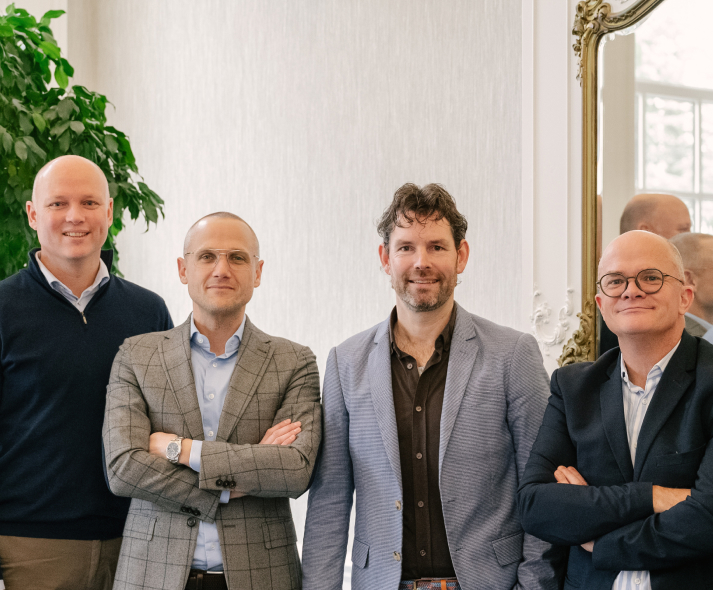
At Smit & de Wolf, people make the difference
We use the latest technology for everything that can be automated. That gives us the time and attention to focus on what truly matters: being the CFO your company needs.
Of course, we take care of financial statements and payroll administration. But we’re also there for the conversations that go beyond the numbers, from discussing a cohabitation agreement with the next generation to guiding a family business through succession.
Of course, we take care of financial statements and payroll administration. But we’re also there for the conversations that go beyond the numbers, from discussing a cohabitation agreement with the next generation to guiding a family business through succession.
“Involved and energetic”
OUR DOORS ARE WIDE OPEN FOR YOU

Scheveningseweg 10
2517 KT The Hague
2517 KT The Hague

How can we help you?
